.jpg)
The Hidden Complexity: Managing Tangible Personal Property with leafplanner
For many Family Offices and High Net Worth households, "wealth" is clearly defined in bank statements and brokerage feeds. But often, the most significant (and sentimentally valuable) assets aren't found on a balance sheet—they are found in the home.
From properties to fine art and vintage car collections to jewelry and historical family archives, Tangible Personal Property (TPP) represents a massive "information gap" in most estate plans.
The Three Risks of Uncatalogued TPP
- The Insurance Gap: Without a centralized inventory, many families are significantly underinsured, or worse, they cannot prove the existence and condition of an item following a loss.
- The "Scavenger Hunt": Family members are often left wondering: Where is the deed to the ranch? Where is the certificate of authenticity for the painting? Who has the combination to the safe?
- The Emotional Friction: TPP is the #1 cause of family disputes. Lack of clarity on "who gets what" or the "history of the piece" turns heirlooms into burdens.
Using leafplanner as Your Digital Inventory
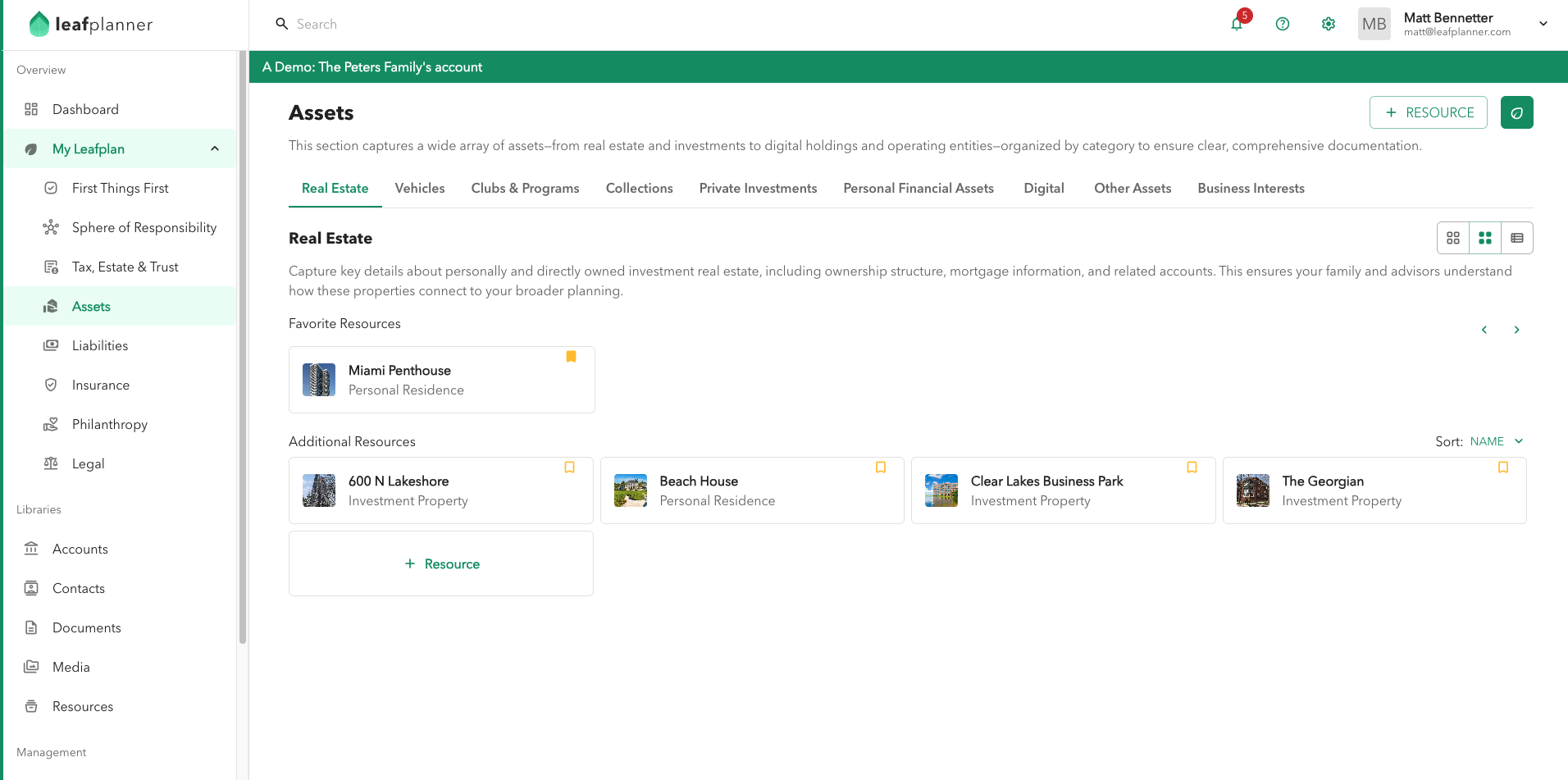
leafplanner isn't just for trusts and tax returns. It is designed to be the Institutional Memory for your tangible assets. Here is how we help you ease into the platform using TPP as your starting point:
1. Centralize the "Paper Trail"
For every major asset, leafplanner allows you to link:
- Appraisals and Valuations: Ensure the most recent 2026 valuation is always accessible for insurance renewals.
- Key Contacts: Link every item to key contacts. From the conservator who handles the art to the specific broker who manages the insurance, you ensure that the "who to call" knowledge is never lost during a transition.
- Verified Ownership Structure: Clearly document which entity actually holds the asset. Whether it’s held personally, within an LLC, or via a specific Trust, leafplanner ensures that your tax and legal teams aren’t guessing about the title when it’s time for a transfer or sale.
- Provenance & Deeds: Keep certificates of authenticity and purchase receipts attached directly to the asset record.
- Physical Location: Explicitly state where the item is stored (e.g., "Vault 4, Zurich" or "The Aspen Residence").
2. Capture the "Intent" (The Why)
A spreadsheet can tell you what a property is worth; it cannot tell you why it mattered to the family. leafplanner allows you to record the narrative intent behind the property.
- Is this intended to be sold to fund a foundation?
- Is it to be passed down to a specific grandchild?
- What is the story behind how it was acquired?
3. Streamline Professional Access
By cataloging TPP in leafplanner, you give your "Team of Advisors" (attorneys, tax pros, and insurance brokers) a single source of truth. No more digging through physical folders to find a 10-year-old appraisal during a tax audit.